
The Difference Between Leading and Managing
It's a #FundraisingFriday take over! Ron Wastyn, professor of organizational leadership at St. Ambrose University, discusses that the way we select people to lead is often problematic and begins with the false premise that just because someone does well at their particular job they will make a good leader.
Want to hear more from Ron? Enroll in the Certificate in Nonprofit Leadership.

Related Nonprofit Tips & Tidbits

While a very serious subject with very real consequences for the nonprofit sector, burnout deserves a laugh before it earns a resignation letter. These 8 tips mix real self-preservation with the kind of dark humor that gets a burned-out staff member through their Tuesday.

Why do we make assumptions? Our brains process billions of pieces of information every day, sorting them into categories by connecting the unknown to the known. Because we know our own feelings and reactions best, we tend to project them onto others. This blog helps identify how to overcome, or at least minimize, your assumption bias.

Writing an effective professional email takes more than good grammar and a polite sign-off; it demands clarity and intentionality. These 8 tips will help every email you send land with greater impact.
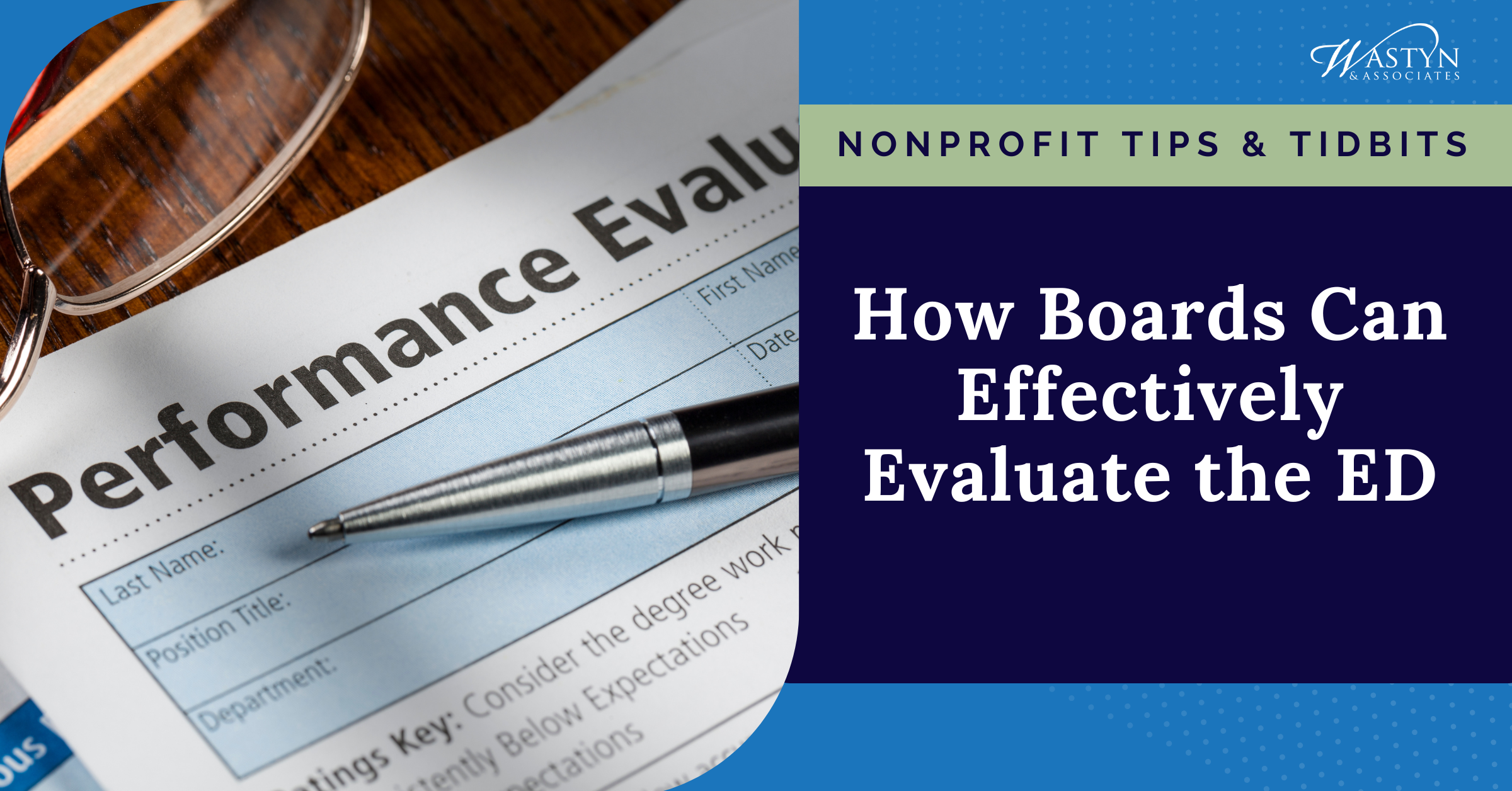
As described in our last post, a strong board-led evaluation process transforms how a board and its executive director work together. It ensures alignment, builds trust, and keeps the organization moving forward with clarity and purpose. While each nonprofit may tailor its process, the best evaluations share the following 7 steps that combine structure with respect.

A 30-45 second explanation of your organization and why it's important, an elevator pitch provides an important tool for educating the public about your organization. When created with your leadership team, board and staff, it also empowers them to both better understand your organization and to share a consistent message with their friends and network.

Effective leadership drives mission success. When the executive director leads with clarity, integrity, and purpose, the organization thrives. Like every employee, even the most talented leader needs regular and structured feedback, direction, and accountability to continue to grow personally and professionally and strategically move the organization forward. For a nonprofit, the board alone carries that responsibility. These five reasons explain how board-led evaluations of your chief executive will reap long-term benefits for your organization.
One strategic plan that I recommend all organizations have is a strategic fund development plan. It allows you to chart out your long-term and short-term goals, find the gaps in achieving that goal, and develop specific steps to get there.
Organizations that have a good strategic plan will more likely achieve their goals, their goals will more likely move them toward their vision of success, and they will have more engaged board members and staff. Learn why you need a strategic plan and how a good planning process can get you there.
Fund development work relies on relationships. People give to people. Understand the importance of building relationships and leveraging your board and volunteers to expand your circle of relationships to expand your fundraising success.
 Ron Wastyn, Ph.D.
Ron Wastyn, Ph.D., earned his doctorate in rhetoric and communication from the University of Pittsburgh. He has served on the faculty at St. Ambrose University for 21 years and currently directs and teaches in their Master of Organizational Leadership Program.
A growing share of nonprofit professionals reports real concerns about burnout. Contrary to popular belief, burnout does not stem solely from long hours or a difficult work environment. This blog post defines the causes of burnout and offers 6 habits to help you build what you need to combat it: fortitude.