
How To Get Your Board to Help With Fundraising
Do you struggle getting your board members to raise money for your organization? Join the club!
That's the number one complaint I hear from boards. Use these three tips to encourage your board to help with development and even like it!
Related Nonprofit Tips & Tidbits
Does your board have the trust and ability to hash out important and potentially controversial topics with professionalism, objectivity, and dispassion? Here are 5 ways to build a culture that will prepare you for when donors go rogue!
How do you move your board from operational focus — or disengagement — toward active oversight? Start with these 4 steps.
The question I hear most often about boards is "how can I get my board more engaged?" or "how can I get my board members to engage?" It takes a lot of time, patience, and hard work to turn an ineffective board into an effective one, but it can and does happen. These four tips will help you start your journey toward a more effective board.
The board guides both the thinking and execution in the strategic planning process to guide the organization’s future. Five actions fulfill this role.
As described in our last post, a strong board-led evaluation process transforms how a board and its executive director work together. It ensures alignment, builds trust, and keeps the organization moving forward with clarity and purpose. While each nonprofit may tailor its process, the best evaluations share the following 7 steps that combine structure with respect.

A 30-45 second explanation of your organization and why it's important, an elevator pitch provides an important tool for educating the public about your organization. When created with your leadership team, board and staff, it also empowers them to both better understand your organization and to share a consistent message with their friends and network.

Effective leadership drives mission success. When the executive director leads with clarity, integrity, and purpose, the organization thrives. Like every employee, even the most talented leader needs regular and structured feedback, direction, and accountability to continue to grow personally and professionally and strategically move the organization forward. For a nonprofit, the board alone carries that responsibility. These five reasons explain how board-led evaluations of your chief executive will reap long-term benefits for your organization.

At a meeting back in February, my staff and I talked about some of the likely challenges with which we thought our clients lived after the barrage of executive orders that the current administration had released at that time.
As executive orders and funding freezes began to feel more common, we started collecting data in a quarterly Federal Grant Impact Survey. Today's blog post highlights are most recent findings and the state of Quad Cities nonprofits today.
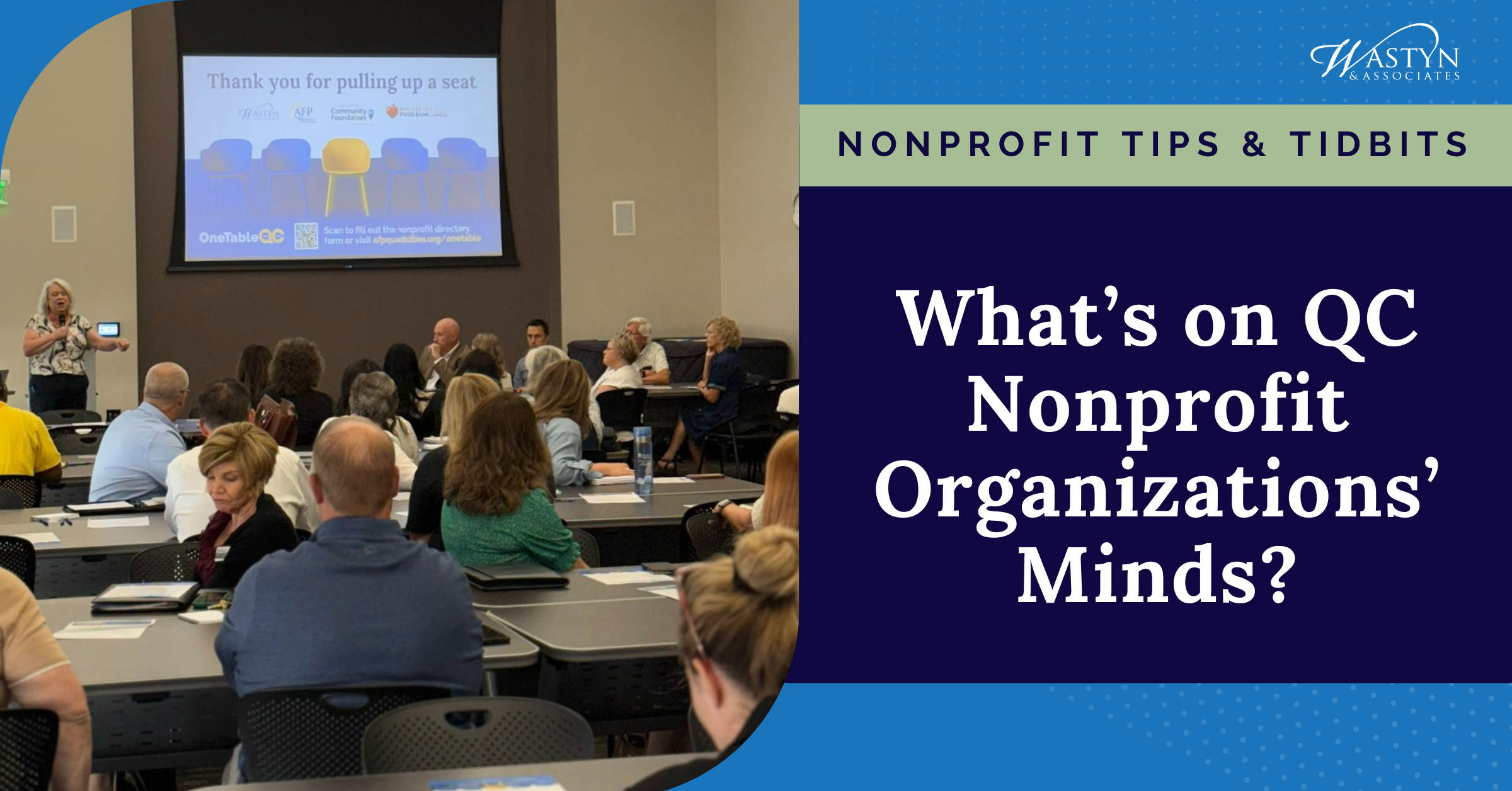
Last week, I had the honor of cohosting the inaugural Table Talk session of the OneTable QC initiative, a joint venture between Wastyn & Associates and the Quad Cities Chapter of the Association of Fundraising Professionals. The event brought together nearly 60 local nonprofit leaders from various sectors to discuss their realities in the current political and economic environment, to share what they anticipate as the various elements of the Reconciliation Bill get implemented, and to brainstorm ways to minimize these impacts on their organizations and the people they serve.

This week, we tackle a problem you may have faced with major donor prospects – what to do when you witness, suspect, or hear through the grapevine that a prospect may show signs of diminished mental capacity.